6-in-1 vs 3-in-1 Hi-Vis Parkas: Which Layering System Should Importers Stock for Winter?
The DongLian team supports OEM workwear and jacket programs for international buyers, from specification review and sample development to bulk and private-label orders.
Compare the two parka systems by wear modes, fabric, hi-vis coverage and cost, plus the checks to run before you order.
Removable-liner hi-vis parkas are a staple of winter workwear ranges, and importers often have to choose between a 3-in-1 and a 6-in-1. They look alike on the hanger but differ in wear modes, construction, cost and what can be verified.
Short answer: choose a 3-in-1 for a simple, repeatable program in steady cold. Choose a 6-in-1 for crews facing big temperature swings, when a higher unit price is acceptable. Either way, check which modes are actually hi-vis before you order.
Contents
The Two Systems at a Glance
| 3-in-1 Parka | 6-in-1 Parka | |
|---|---|---|
| Core configurations | Shell alone, liner alone, shell + liner | Shell alone, shell + liner, liner jacket (hi-vis side), liner jacket (quilted side), liner vest (hi-vis side), liner vest (quilted side) |
| Liner sleeves | Detachable | Detachable (dark) |
| Reversible liner? | No (sleeves detach to form a vest) | Yes, jacket and vest (hi-vis side / quilted side) |
| Hi-vis-colored modes | Set by the liner color you specify | 4 of 6 (mode 3 has dark sleeves); modes 4 and 6 use the black quilted side |
| Shell lining | Smooth full-polyester lining (190T) | Mesh lining |
| Typical use | Consistent cold, simple SKU program | Variable conditions, wide temperature range |
| Complexity and unit cost | Lower | Higher |
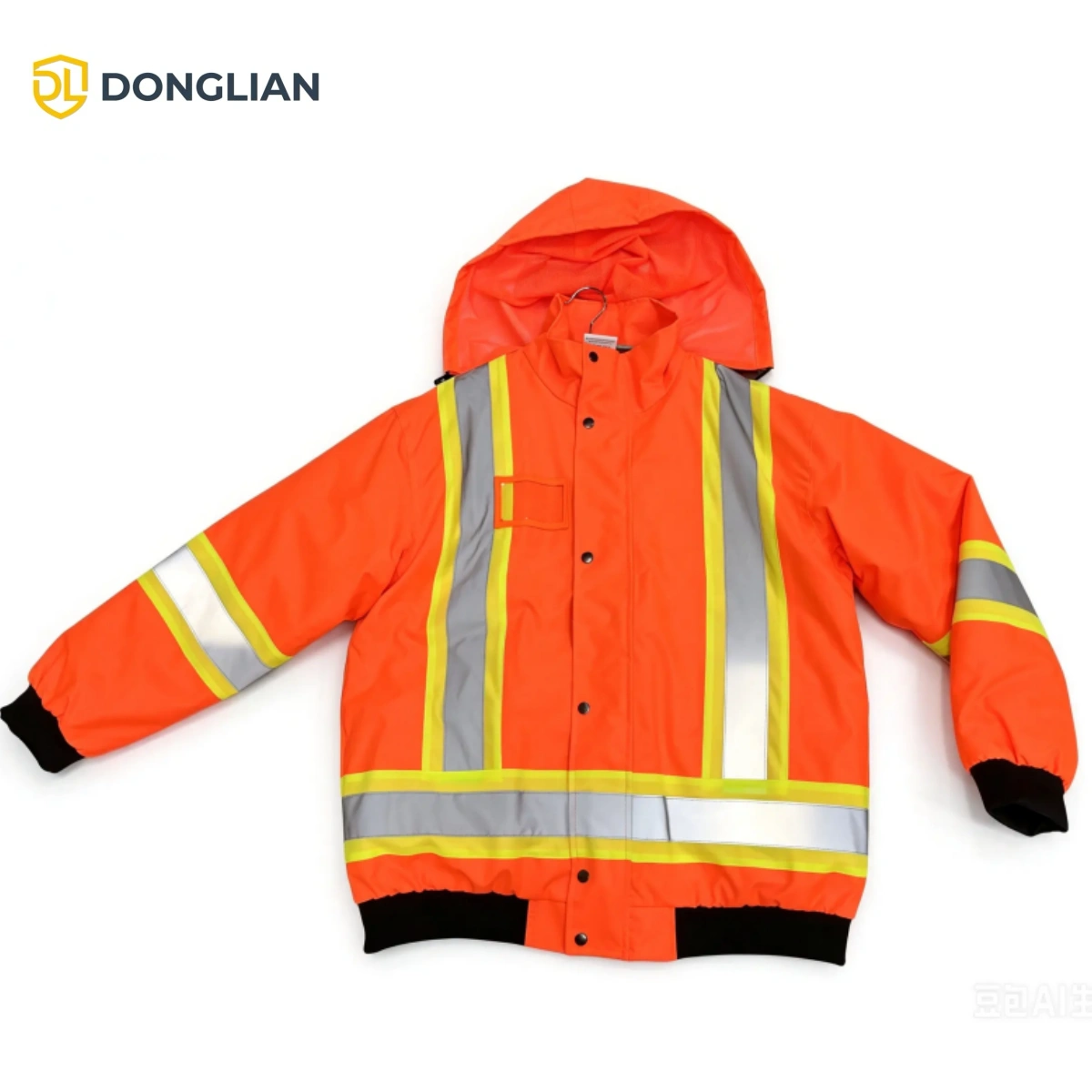
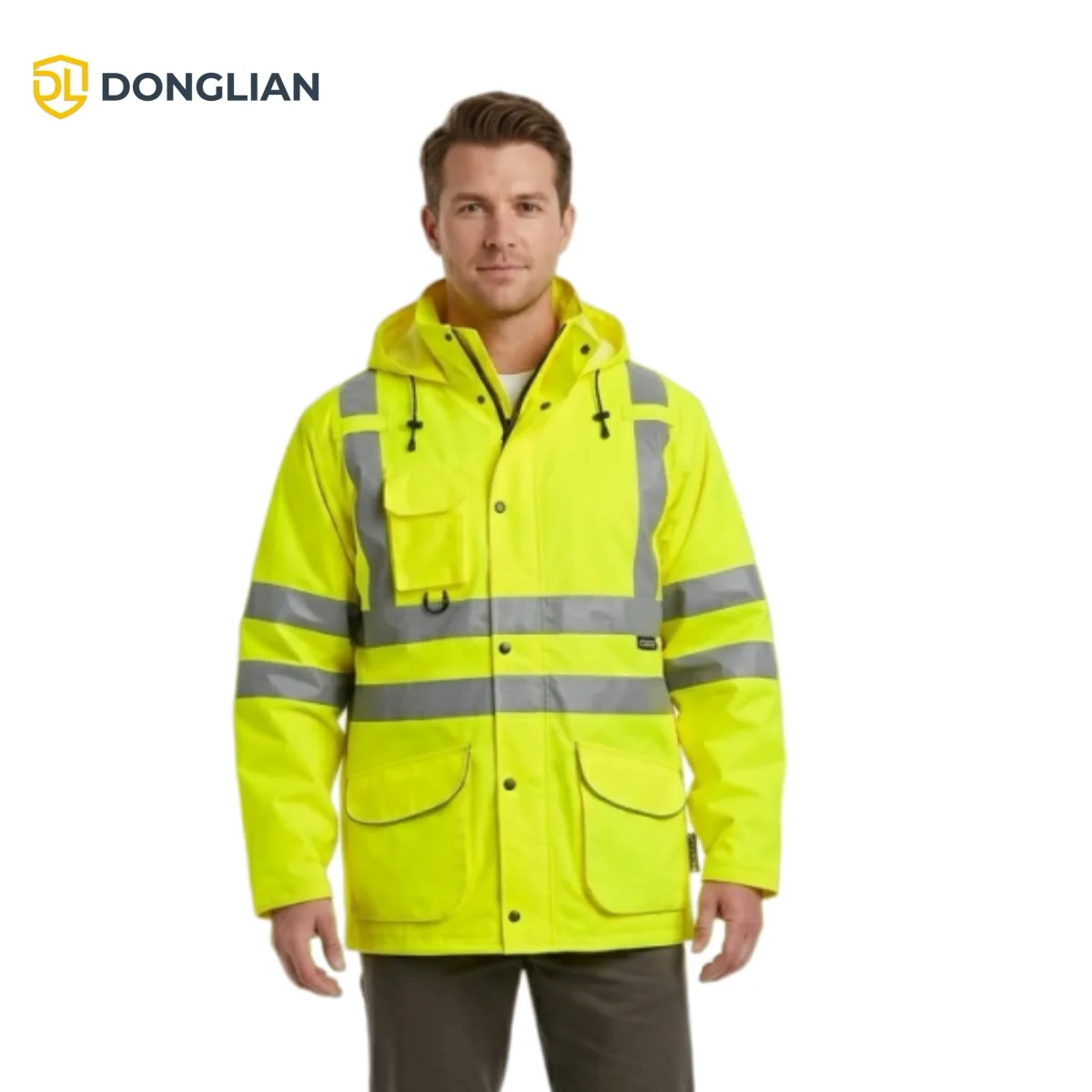
Compare shell weights, tape layouts and class options across the full hi-vis winter parkas range.
What “3-in-1” and “6-in-1” Actually Mean
The numbers count the ways the garment can be worn.
3-in-1. The shell is a waterproof hi-vis jacket with a detachable hood. The insulated liner zips out and can be worn alone, and its sleeves also zip off; the liner vest is not reversible. The three core modes are shell alone, liner alone, or both together.
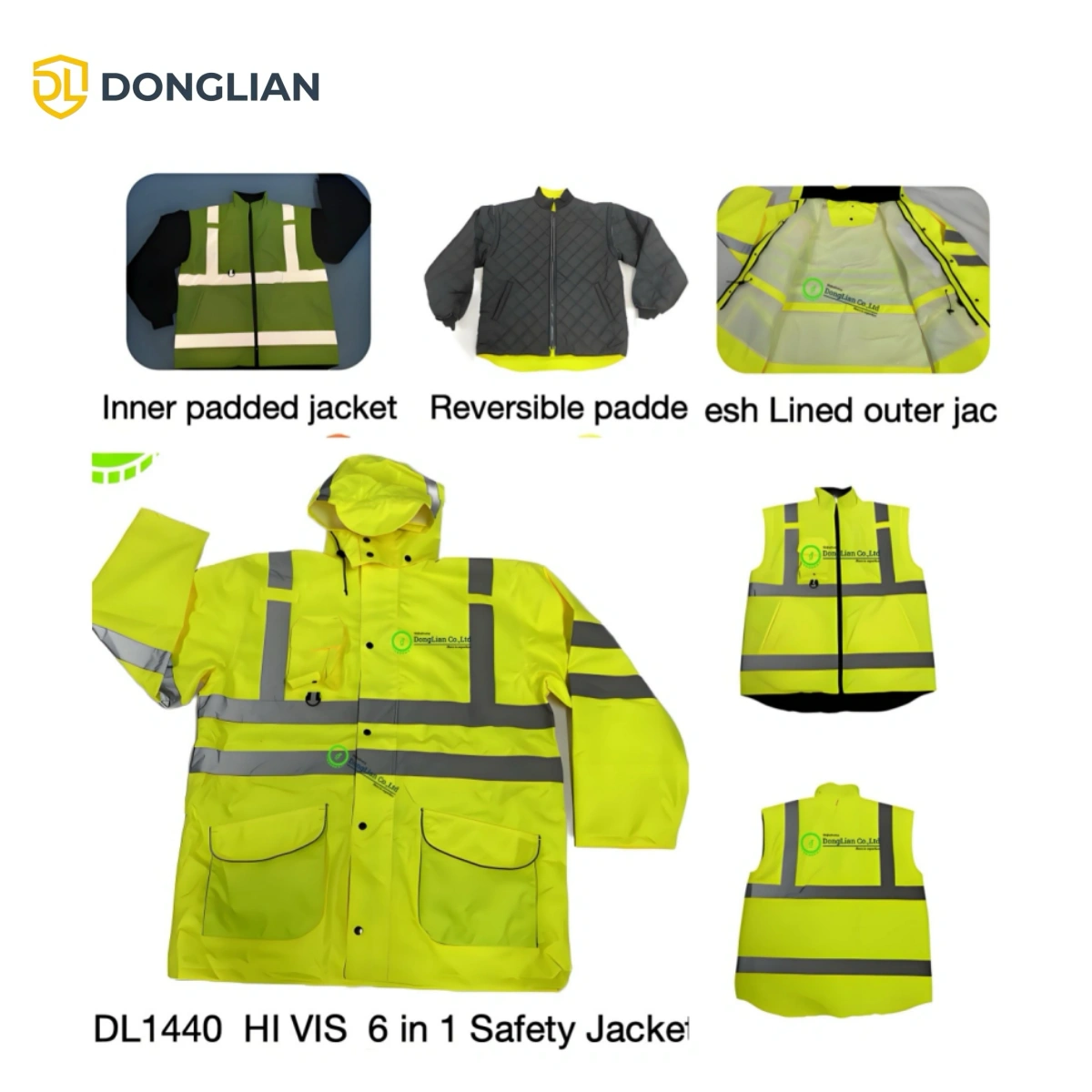
6-in-1. The shell is a standalone waterproof jacket with a removable hood and mesh lining. The liner is a padded jacket with pockets, fluorescent on one side and black diamond-quilted on the other. Its dark sleeves zip off to leave a padded vest, also reversible. The six modes are:


The reversible liner is the main difference: one purchase becomes several garments. But not all six modes are hi-vis. Modes 4 and 6 use the black quilted side, and mode 3 has dark sleeves; only modes 1, 2 and 5 show no dark panels. If your site or tender requires hi-vis at all times, name the compliant modes in the spec (see check 1).
Where Each System Fits
A Canadian buyer chose the 3-in-1 hi-vis parka for a straightforward winter line; a buyer in Argentina chose the 6-in-1 hi-vis parka for mine crews working through changing conditions. These are single examples, not a rule.
| End-user situation | Lean toward | Why |
|---|---|---|
| Road, utility or warehouse crews in steady cold | 3-in-1 | Simpler build, lower unit cost |
| Big daily or seasonal swings (mining, outdoor-to-indoor work) | 6-in-1 | More wear modes from one garment |
| Tender or site rule requiring a class in every worn mode | 3-in-1, or 6-in-1 limited to named modes | Fewer modes to document; the 6-in-1 has two non-hi-vis modes |
| One core line plus one premium line | Both | Cover price tiers without overlap |
You can also run both: the 3-in-1 as the volume line (simpler to spec, easier to hit a price) and the 6-in-1 as the premium line for crews that need flexibility. Both use the same shell fabric specification, so quality checks can stay aligned. For a wider view of what to stock, see our hi-vis winter workwear wholesale guide. Still undecided? Request one sample of each — and for lighter cold-weather options, compare hi-vis softshell and fleece jackets.
Four Checks Before You Choose Either System
- 1
Which modes are hi-vis, and which does the class apply to?
A hi-vis class describes the garment as worn, so a rating on the full parka cannot be assumed for every mode. On the 6-in-1, two modes use the black quilted side and are not hi-vis, and the liner jacket’s fluorescent side has dark sleeves. Ask your supplier and test lab to state exactly which modes the class covers, and write them into the spec. This matters most for tenders.
- 2
How are fabric and garment certificates split?
Fluorescent fabric and reflective tape can carry their own test reports; garment-level certification is a separate step. If Class 3 is mandatory on your sites (roadwork, rail, construction), plan for garment-level evidence for each mode you need, and for its timeline. See our ANSI/ISEA 107 vs EN ISO 20471 guide.
- 3
How is the liner attached?
Both systems attach the liner sleeves with zippers, a point stressed by daily use and repeated detaching. For heavy-use programs, specify a recognized zipper brand such as YKK or SBS and ask for wear testing on the connection.
- 4
What do the fabric specifications really say?
For both parkas the shell is 300D Oxford with a PU coating, rated 5,000 mm waterproof and 3,000 g/m²/24h breathable, with fully taped seams. Standard weight is 160 gsm, and 180 gsm is available. Ask for these figures in writing, with the test method. A waterproof number without a method is only a claim.
Customization Options That Affect Your Decision
Both parkas can be developed to your specification:
- Colors: shell and liner can be specified separately, for example fluorescent yellow, orange-red, navy or black.
- Class 3 designs: reflective tape layouts can follow ANSI Class 3 or EN ISO 20471 Class 3, as specified by your customer or tender.
- Branding and trims: private-label labels, logo placement, packaging and upgraded zippers.
Frequently Asked Questions
Yes, but check the mode. The 6-in-1 liner alone has a fluorescent body with dark sleeves, so do not treat it as equivalent to the full parka for hi-vis compliance, and its reversed quilted side is not hi-vis. For the 3-in-1, visibility depends on the liner color you specify. If your site requires hi-vis in every layer, name the modes that must meet the class and ask for test evidence for them.
Fabric and reflective-tape test reports at minimum. State in the RFQ whether garment-level certification is required. For standards background, see our ANSI/ISEA 107 vs EN ISO 20471 guide.
The MOQ is 300 units per style per color. Sampling takes 10–12 days for padded parkas, and bulk production runs 7–8 weeks after order confirmation. Special colors and trial orders can be discussed.
Comparing 3-in-1 and 6-in-1 for a Winter Program?
Send us your target market, class requirement and order volume — we can review both systems and share fabric and reflective-tape test reports.
Request Samples or a QuoteSupporting OEM hi-vis parka programs from specification review and sampling to bulk production — 3-in-1 and 6-in-1 layering systems, waterproof and breathable shells, reflective tape layouts and private-label branding.
About DongLian