Why industrial buyers can’t have both — and how to match fabric technology to job intensity.
Our founding team draws on over a decade of experience in the industrial rainwear export industry — encompassing fabric technology selection, manufacturing management, and international PPE compliance documentation, with EU garment certification for FR rainwear issued by AITEX.
Waterproof vs. Breathable: Why Industrial Rainwear Buyers Can’t Have Both (And What to Do About It)
Picture this common site scenario: A crew of utility or construction workers dons 100% waterproof heavy-duty raingear ahead of a downpour. Three hours into active labor, the rain subsides — yet the workers are completely drenched.
The water didn’t leak through from the outside. Instead, body heat and heavy physical exertion turned the inside of their suits into a vapor trap. The sweat had nowhere to go. For safety managers and procurement teams, this scenario illustrates the fundamental challenge of specifying protective rainwear: Waterproofing and breathability are inherently at physical odds. Marketing claims promising “100% waterproof and 100% breathable” protection often collapse under the reality of rigorous industrial wear. Understanding the physics behind these trade-offs — and knowing how to match fabric technology to specific job requirements — is essential to keeping workers protected, compliant, and comfortable.
1. Why Waterproof and Breathable Are Physically at Odds
To understand why rainwear struggles to manage both liquid water and sweat, you have to look at how fabrics are constructed.
- Waterproof Coatings and Laminates: Traditional industrial protective wear relies heavily on dense polymers like PVC or continuous polyurethane (PU) coatings. These materials create an impenetrable barrier that keeps exterior hydrostatic pressure (rain, splashes, or chemical exposure) out. However, because they are solid, non-porous layers, they completely block air circulation and moisture vapor transmission.
- The Physics of Breathability: True fabric breathability requires continuous micro-pores — openings large enough to allow microscopic water vapor molecules (sweat) to escape, but small enough to prevent liquid rain droplets from entering.
In demanding weather, high exterior moisture combined with internal body heat creates an extreme humidity gradient. When high-barrier materials prevent vapor from escaping, moisture accumulates on the inside of the garment.
In technical specifications, this trade-off is measured by two key metrics:
- Waterproof Rating (Hydrostatic Head in mm): Measures how much water pressure a fabric can withstand before leaking (often tested under standard EN 343 criteria for high-performance heavy-duty rainwear).
- Breathability Rating (MVTR / Moisture Vapor Transmission Rate): Measures how many grams of water vapor can pass through a square meter of fabric over 24 hours (g/m²/24h).
The higher the waterproof rating achieved through solid barrier coatings, the harder it is to maintain high MVTR without specialized (and costly) membrane technologies.
2. The Real Cost of Getting This Balance Wrong
Selecting rainwear based solely on maximum waterproof ratings without considering work intensity leads to serious operational issues:
- Worker Non-Compliance: When rainwear feels like a “wearable sauna,” workers frequently unzip jackets or remove protective outerwear entirely, exposing themselves to weather hazards, thermal shock, or chemical splashes.
- Post-Exertion Hypothermia: Trapped sweat saturates inner workwear layers. Once workers pause or cold winds set in, wet base layers rapidly cool the body, increasing the risk of cold stress and fatigue.
- Wasted PPE Investments: Procurement teams that purchase heavy, non-breathable gear for high-exertion crews often face worker complaints and high replacement rates as garments go unused.
3. Matching Fabric Technology to Work Intensity
Because no single jacket excels at every task, successful procurement relies on matching garment design to the physical requirements of the jobsite.

Protective barrier selection matrix — four quadrants matching work intensity (high/low) to environmental severity (high/low) for industrial rainwear procurement
High-Exertion & Active Work
For workers performing continuous physical labor, heat buildup is the primary challenge. Standard heavy PVC gear will quickly lead to overheating. In these environments, opting for lightweight rainwear with structural airflow features helps manage internal heat while offering adequate rain protection.
Extreme Environments & Dual-Hazard Conditions
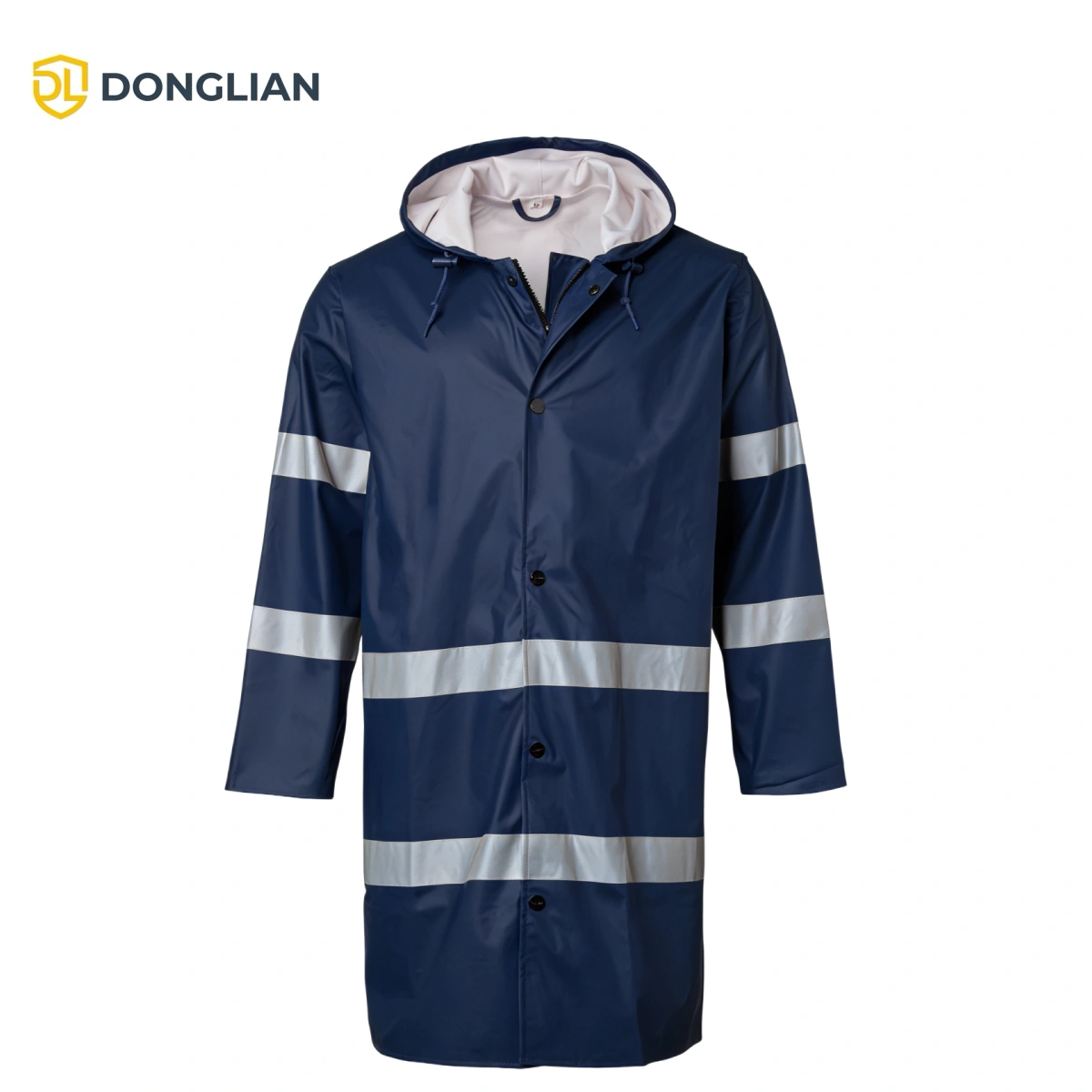
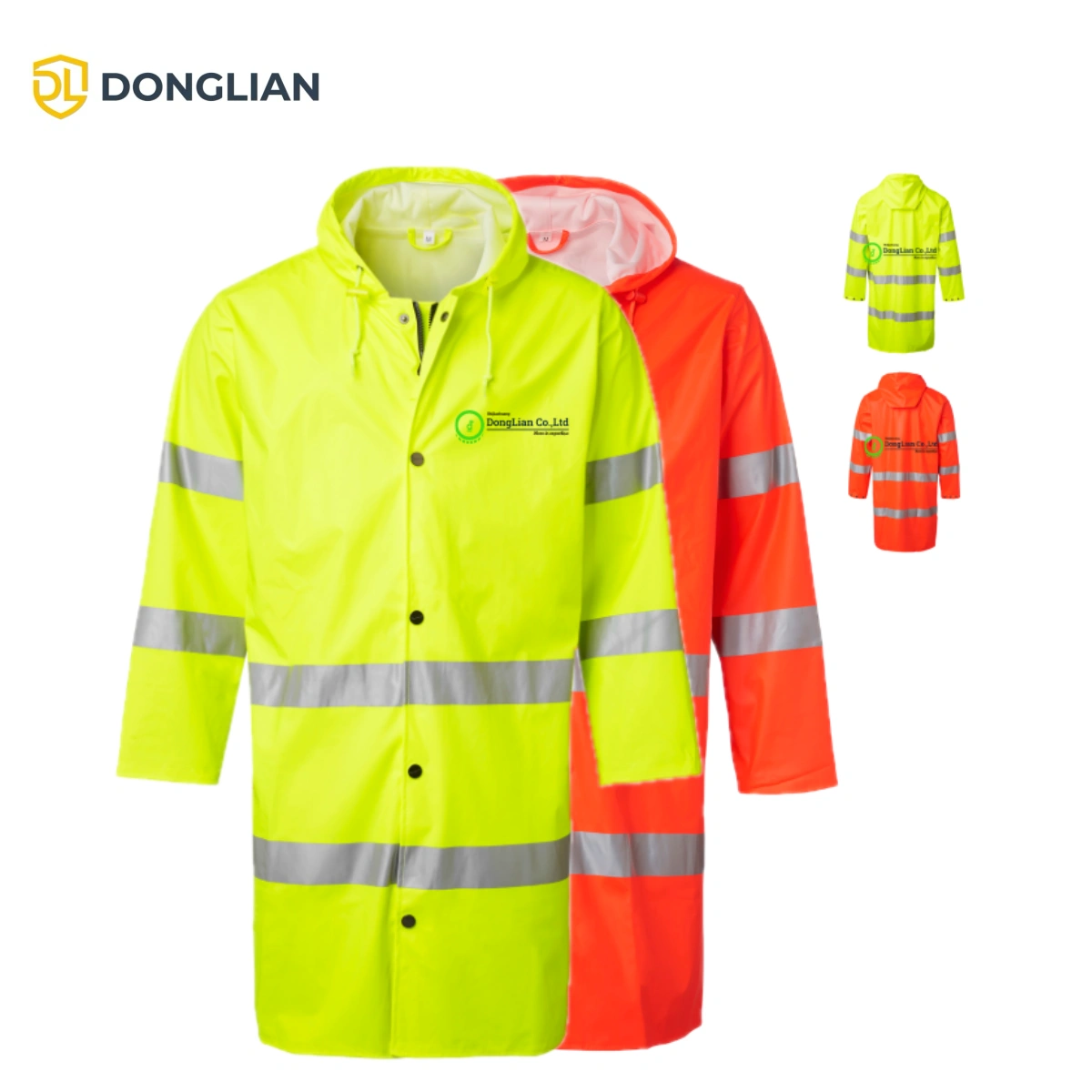
When workers face severe weather combined with industrial hazards — such as flash fires or arc flashes — protection takes absolute priority over breathability. Flame-retardant rainwear utilizes heavy-duty non-porous barriers to meet strict flame and fluid standards. For instance, certified protective gear like our DL1152FR FR Hi-Vis Rain Suit — with EN ISO 20471, EN ISO 14116, and EN 343 certification — prioritizes strict barrier protection; thermal discomfort in these high-risk settings is managed through scheduled work-rest rotations rather than compromising fabric density. For a deeper comparison of FR vs. standard rain suits, see our FR Rainwear vs. Regular PVC Rain Suits analysis.
Low-Exertion or Daily Field Duty
For roles involving limited physical movement or routine site walkthroughs — such as security details, site inspection, or general utility work — sweat accumulation is minimal. In these scenarios, durable barrier coats utilizing PU rainwear options provide reliable, long-lasting waterproof performance at a cost-effective price point. For a material comparison, see our PU vs. PVC Rainwear guide.
4. Structural Design Features That Mitigate Heat Buildup
When solid waterproof fabrics are required for high-barrier protection, garment engineering features can be specified to provide mechanical ventilation where the fabric itself cannot breathe:
- Back Ventilation Flaps: Overlapping rear vents covered with storm flaps allow trapped warm air to escape while preventing wind-driven rain from entering.
- Seam-Sealed Protection: Precision seam-taping ensures that needle holes from stitching are thermally welded, preventing leakage at major stress points without adding excess weight to the primary shell.
- Interior Mesh Linings: Suspended mesh interior linings create a micro-climate air pocket between the waterproof barrier and the wearer’s clothing, reducing the “sticking” sensation caused by interior condensation.
- Adjustable Storm Closures: Dual-zipper storm fronts and adjustable wrist closures allow wearers to manually regulate airflow during low-rain intervals without completely taking off their protective outerwear.

5. Questions Procurement Teams Should Ask Suppliers
Before placing a bulk protective rainwear order, ask your safety apparel supplier these crucial technical questions:
- “What is the specific EN 343 class rating for both Water Penetration Resistance and Water Vapor Resistance?”
- “Is this garment designed for continuous active wear, or is it intended for short-duration weather exposure?”
- “Does the garment construction include mechanical ventilation features (e.g., back vents or mesh lining) to compensate for fabric barrier density?”
- “Can you provide test reports validating both waterproof integrity and flame resistance standards where applicable?”
6. Finding the Right Balance for Your Workforce
There is no universal rain jacket that delivers absolute liquid protection alongside total breathability. Achieving optimal safety and worker comfort requires selecting gear designed specifically for your industry’s physical demands.
When equipping crews in high-hazard sectors requiring specialized protection, such as oil and gas workwear, choosing the correct balance of fabric technology and garment structure is key to maintaining workplace compliance. For planning your procurement timeline, see our Rainwear Manufacturing Lead Time guide.
Need assistance selecting the right protective specification for your workforce? Contact our technical PPE specialists to request fabric samples or review test certification data for your application.
Frequently Asked Questions
No. Waterproofing and breathability are physically at odds. Solid barrier coatings like PVC block liquid water completely but also trap sweat vapor. True breathability requires micro-porous membranes, which are more expensive and less durable under heavy industrial wear. The practical solution is matching fabric technology to the specific work intensity of your crew.
MVTR (Moisture Vapor Transmission Rate) measures how many grams of water vapor pass through a square meter of fabric in 24 hours (g/m²/24h). A higher MVTR means better breathability. However, high MVTR fabrics typically use micro-porous membranes that are more expensive and may sacrifice some waterproof durability compared to solid PVC or PU barrier coatings.
For low-exertion or daily field duty where sweat accumulation is minimal, durable PVC or PU barrier coatings provide reliable, cost-effective waterproof protection. For high-exertion active work, consider lightweight rainwear with structural airflow features (back vents, mesh lining) or breathable membrane alternatives. See our PU vs. PVC Rainwear comparison for a detailed material breakdown.
EN 343 uses two independent grading systems: Water Penetration (WP, Class 1–3) and Water Vapor Resistance (RET, Class 1–4). A garment rated WP3 for water penetration is highly waterproof, but if the RET class is low (Class 1 or 2), the garment is not breathable. For active workers, look for WP3 + RET Class 3 or 4 (RET ≤ 20 m² Pa/W), or specify garments with mechanical ventilation features like back vents and mesh lining.
In dual-hazard environments (flash fire, arc flash), protection takes absolute priority over breathability. FR rainwear uses heavy-duty non-porous barriers to meet strict flame and fluid standards, which inherently limits breathability. Thermal discomfort in these settings is managed through scheduled work-rest rotations rather than compromising fabric density. See our FR vs. Regular PVC Rain Suits comparison for more details.
Not Sure Which Fabric Technology Fits Your Crew?
Send us your job site requirements, work intensity levels, and required safety standards. We’ll recommend the right balance of waterproofing, breathability, and compliance — and provide test documentation.
Get a Fabric Recommendation